magyar

How many systems are you paying for? And how many do you need?

Most organisations pay for more software than they use: overlapping systems, unused licences, and critical spreadsheets nobody knows about. We make this visible in one inventory, with a savings proposal.

Request the free quick diagnosis

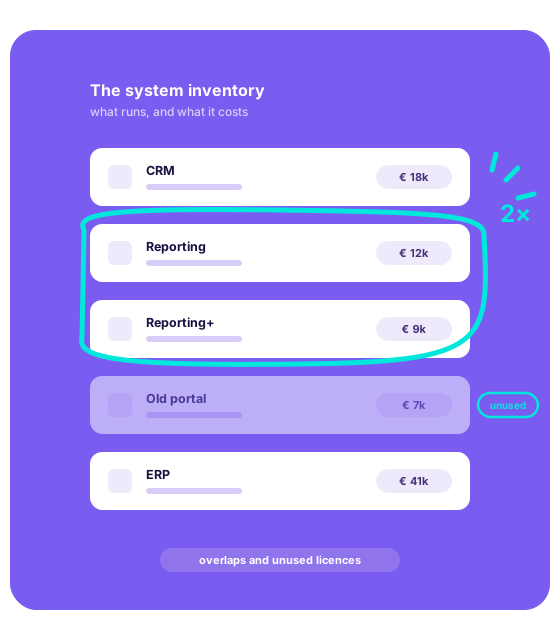
System inventory panel: five system cards, two overlapping marked, one unused faded

Sound familiar?

Two systems, one job.

You pay for several tools doing the same work, because different areas decided on them, and nobody sees the full list.

Nobody knows exactly what each system is for.

The list of systems lives in heads, old spreadsheets, and contracts. When a question comes up, it takes days to assemble the answer.

The operation depends on one colleague's spreadsheet.

Critical processes run in spreadsheets next to the official systems, known only to the person who built them. If they are away, work stops.

Licence costs only grow.

Renewals come every year, and there is no basis for questioning them. Signing is easier than investigating.

What you get

  • A complete system inventory in business language: what runs, what it is for, who owns it, what it costs
  • The list of overlaps and replaceable applications, including the critical spreadsheets
  • A ranked savings proposal with numbers, ready for an executive decision

The assessment is vendor-independent: we are not selling you a new system or licences. The proposal follows from what the assessment shows about your systems and costs.

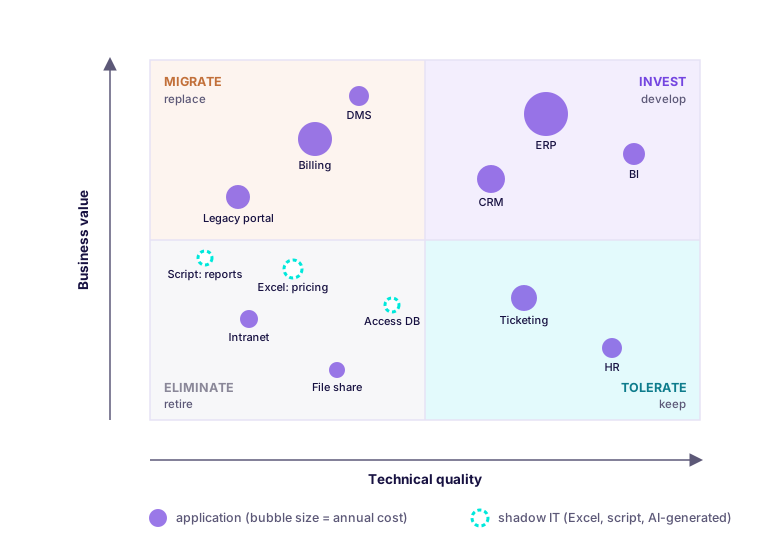
Example application portfolio assessment: systems by business value and condition
The real inventory is built from your systems.

How we work

1 We collect what actually runs.

Systems, contracts, costs, and the solutions living in spreadsheets too. Interviews with the business areas: what they use, what for, and what they are missing.

2 We map it to the operation.

For every system we state which area it serves, who owns it, and what it costs per year. This is where the overlaps show.

3 A savings proposal.

A ranked list: what to retire, what to merge, what to keep. With numbers, ready for an executive decision.

How to start

free

Portfolio quick diagnosis

One or more 30-minute structured interviews about the system portfolio (depending on company size), then a one-page summary: the main pain points, a quick maturity assessment of the portfolio, and where we would look for savings first. If you have a system list, we review that too. In your hands within a week.

Request the free quick diagnosis

4–12 weeks (depending on size)

Full portfolio assessment

A complete system inventory mapped to the operation, with overlaps and a ranked savings proposal. We agree the exact scope together after the quick diagnosis.

Talk to us about the full assessment

How it looked in practice

Case studyHungarian utility enterprise

Dozens of applications, one shared map

The challenge

The portfolio had been shaped for years by fast-changing market and regulatory demands. Most applications were monolithic, many of them legacy; integrations ran through custom middleware rather than standard rules, and the criticality ratings of several systems no longer reflected their real business weight.

What we did

We started top-down: the focus was set with the executives, then every application was assessed bottom-up. Based on interviews and questionnaires, each application received business, technology, security, and compliance scores, layered by an industry-standard method and organised into business domains.

What came out of it

  • A scored inventory of the full application portfolio, organised by business domain
  • Integration and application-capability diagrams that make the connections visible
  • Revised criticality ratings aligned with the real priorities of operations
  • A ranked set of recommendations: integration rules, DevOps practice, architecture tooling

Our experts

Gabor Sulok

Gabor Sulok

Business and enterprise architecture

Founder & CEO

Adam Horvath

Adam Horvath

IT and software architecture

Head of AI

Brigitta Nagy

Brigitta Nagy

Business process management

Advisory Consultant

  • 20+ yearsof leadership and architecture experience in the team
  • cross-industry8 industries, including banking, insurance, manufacturing, and energy
  • EMEAour main operating region is Europe and the Middle East
  • ISO/IEC 27001:2022certified information security management system

Teams we've worked with

  • Banca Transilvania
  • NTT DATA
  • UNIQA
  • GP Strategies
  • Clarity
  • Orbus Software
  • Kométa

…and many more

Request the free portfolio quick diagnosis

One or more 30-minute interviews (depending on company size), then a one-page summary of the main pain points, the portfolio's maturity, and the likely directions for savings. No commitment.

Frequently asked questions

At what company size is this worth doing?

Where the number of systems is above twenty, there are typically overlaps and unused licences already. Above a hundred, almost certainly.

How long does it take?

Typically 4–12 weeks, depending on the size of the portfolio. We confirm it in the first conversation.

Do you need access to our systems?

No. We work from documents, contracts, and interviews. We operate an information security management system certified against ISO/IEC 27001:2022.

How much does it cost, and does it pay off?

It depends on the scope: after the quick diagnosis we give an exact offer, also as a fixed price. The proposal quantifies the savings per system, so it is clear what the assessment delivered.

Are you going to replace our systems?

Replacement is not the goal: whatever serves the operation well stays. The proposal is about what is redundant, what can be covered by tools you already own, and what is worth keeping.

How much of our IT team's time will this take?

Not much: we need interviews and existing documents, not system access. We carry most of the work and keep IT involvement to the conversations themselves.