Organisational change management
- standalone too can be added to a running implementation
- from planning recommended start, not just before go-live
- until embedded we stay until the old way disappears
- 0.5–1 FTE alongside the programme
Transformations rarely fail on technology. The system gets built, the process is documented, and yet nothing changes: people walk the old path because no one prepared them for the new one. The human side of change is not a communication task at the end of the project; it is part of the transformation from the start.
This is the side we carry. We start with a stakeholder map and impact analysis: who is affected, and how. On this we build the leadership side, because change research has measured active, visible executive sponsorship as the number one success factor for a quarter of a century: next to the sponsor we engage middle management and build a change agent network from the key people in each affected area. Communication is split between two voices: the business case comes from senior leadership, the personal impact from the direct manager, and the channels are two-way, not announcements. We measure the result not by trainings held, but by whether the new way of working has embedded in daily routine: we keep measuring past go-live, until the old way is gone.
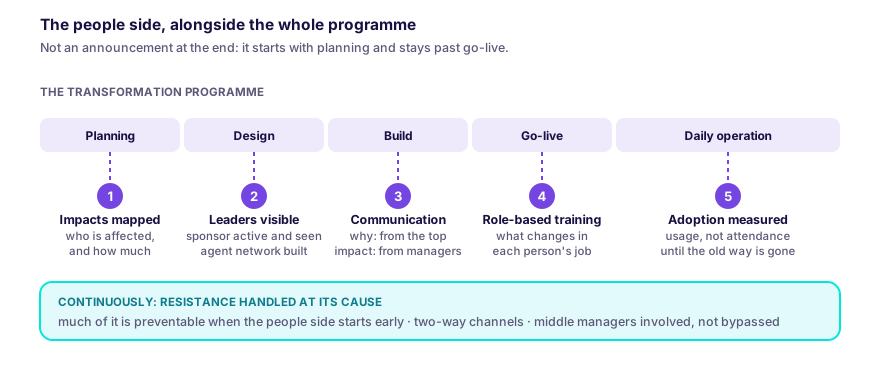
The people side across the whole programme
Change management is not a closing communications task: it starts with planning and continues past go-live, until the old way is gone.
When do you need us?

The system is live, but no one uses it
The handover is done and every report shows green. Yet people keep looking for the old way: Excel, workarounds, parallel records.

Middle management quietly resists
Middle managers were left out of the planning, so they do not represent the change. They do not say no; they simply do not carry it forward.

The communication is a single announcement
Change communication amounts to saying there is a new system from Monday. No one knows what is in it for them, or what changes in their own work.
Our process
Stakeholder map and impact analysis
We map who is affected and how: which groups' daily work changes, how ready the organisation is, and where the strongest resistance can be expected.
Sponsor, middle managers, change agents
We design the executive sponsor's active, visible role, make middle management an advocate of the change, and build a change agent network from the key people in each affected area: they keep the link between the programme and daily work.
Communication and preparation
We design targeted, two-way communication per group: the business case comes from the top, the personal impact from the direct manager. Preparation is role-specific: everyone learns what changes in their own work. We do not suppress resistance; we address it at its cause.
Measuring adoption
We track with usage data and process metrics whether the new way of working has actually taken hold: we look at the share of work running the new way, not at training attendance. We stay past go-live, until the old way disappears.
Let's see what this would give you.
Book a free 30-minute consultationWhat you get
- Stakeholder map and impact analysis with expected resistance points
- A sponsorship plan: the executive sponsor's active, visible role designed
- A change agent network built and prepared from the key people in each affected business area
- Targeted, two-way communication per group: the business case from the top, the personal impact from the direct manager
- Role-specific preparation focused on what changes in each job
- Adoption measurement based on usage data and process metrics, past go-live too
What it gives you
- People who understand what changes in their own work, and why
- Leaders who visibly carry the change, instead of merely announcing it
- Middle management engaged and advocating the change
- Resistance addressed at its cause, not suppressed
- A new way of working that embeds in daily routine and lives without management enforcement
Frequently asked questions
How is this different from Independent implementation oversight?
Oversight controls the professional work: plans, gates, vendor delivery. This service concentrates specifically on the organisational change: on people understanding, accepting, and following the new way of working. The two cover the implementation as a pair.
How does it connect to the target operating model?
The target operating model draws up the new way of operating. This service helps the organisation accept it: the people affected understand what changes in their work, and why.
What do you need from leadership?
An active and visible sponsor: change research has measured this as the number one success factor for a quarter of a century. Approving the project is not enough; presence is needed. People want to hear the business case from senior leadership and the personal impact from their direct manager. We prepare both levels of leadership for these two distinct roles.
What do you do with resistance?
We address it at its cause. The most common cause is not ill will but that people do not understand why the change is needed; elsewhere it is fear for one's own job or a lack of trust. Each calls for something different: sometimes communication, sometimes involvement, sometimes a conversation with a leader.
Can it be ordered on its own?
Yes. A common situation is adding change management support to a running implementation, because the project delivers but the organisation does not move.
When should we start?
Alongside the planning, not in the weeks before go-live. Research experience shows a large share of resistance is preventable when change work starts early, and the stakeholder map and impact analysis also improve the project's early decisions.
How do you see that the change has embedded?
Not from training attendance sheets. We look at usage data, process metrics and feedback: the share of work running the new way against the old, the depth of use (not just logins), and whether the new process lives without management enforcement.
How we can work together

Fix Scope
Scope and fee are agreed together at the start. For well-defined work this is the most predictable form; the business capability map, for example, typically runs this way.

Time & Material
Effort-based billing with a flexible scope. It works best when the task takes shape along the way and quick changes of direction matter.

Architect as a Service
An ongoing arrangement: architect capacity without hiring a full-time specialist. It can be fixed-price and predictable, or ad-hoc involvement; it scales up or down as needs change.
Book a free 30-minute consultation
Tell us briefly about your situation. We'll get back to you and start with a free, no-obligation 30-minute consultation.